

MA-ID: 2533502018
Évaluations Enumismatics Inc.

Hurtig levering fin mønt
die beste Verkäufer, super Verpakung, turbo Lieferung, immer wieder!!!!
die beste Verkäufer, super Verpakung, turbo Lieferung, immer wieder!!!!
die beste Verkäufer, super Verpakung, turbo Lieferung, immer wieder!!!!
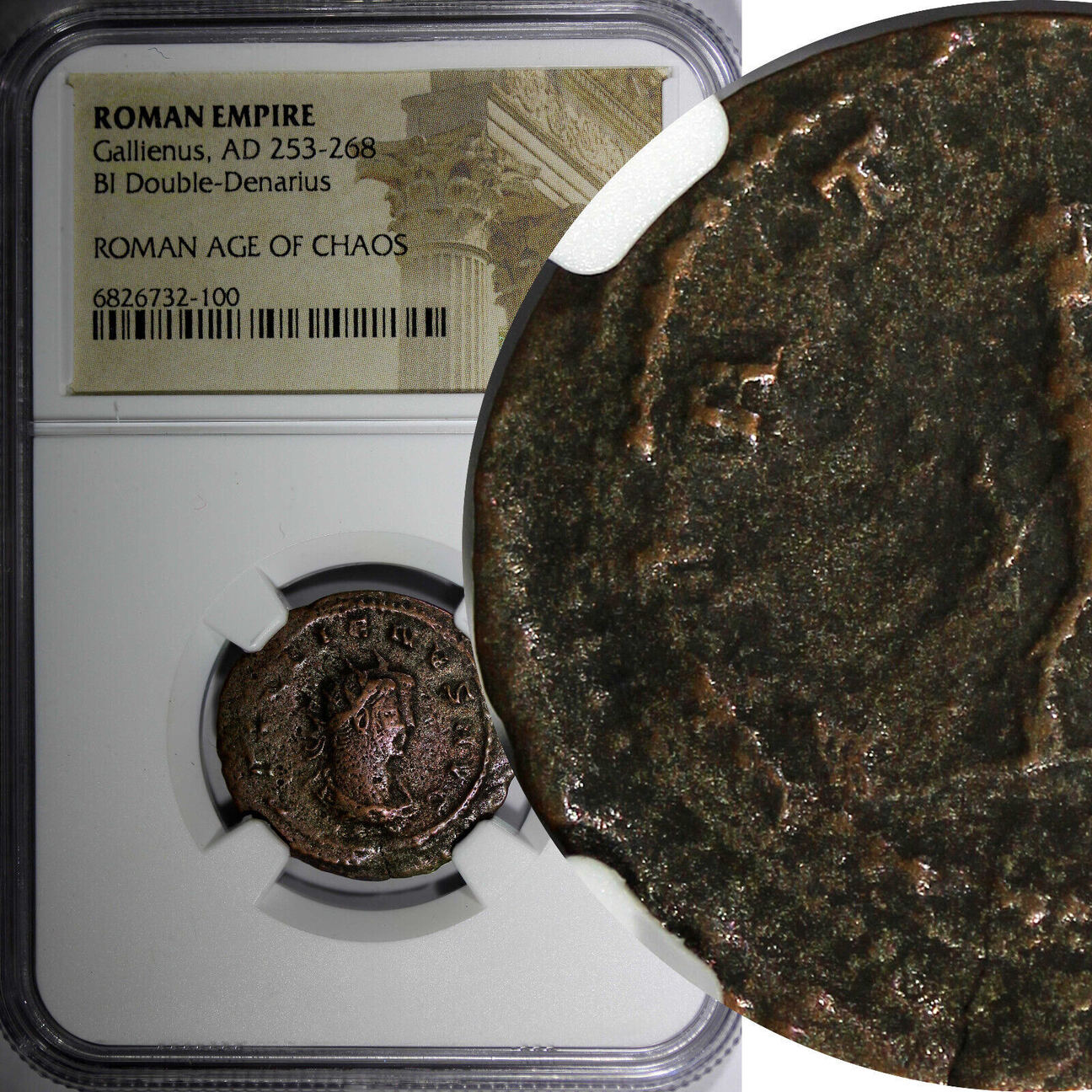
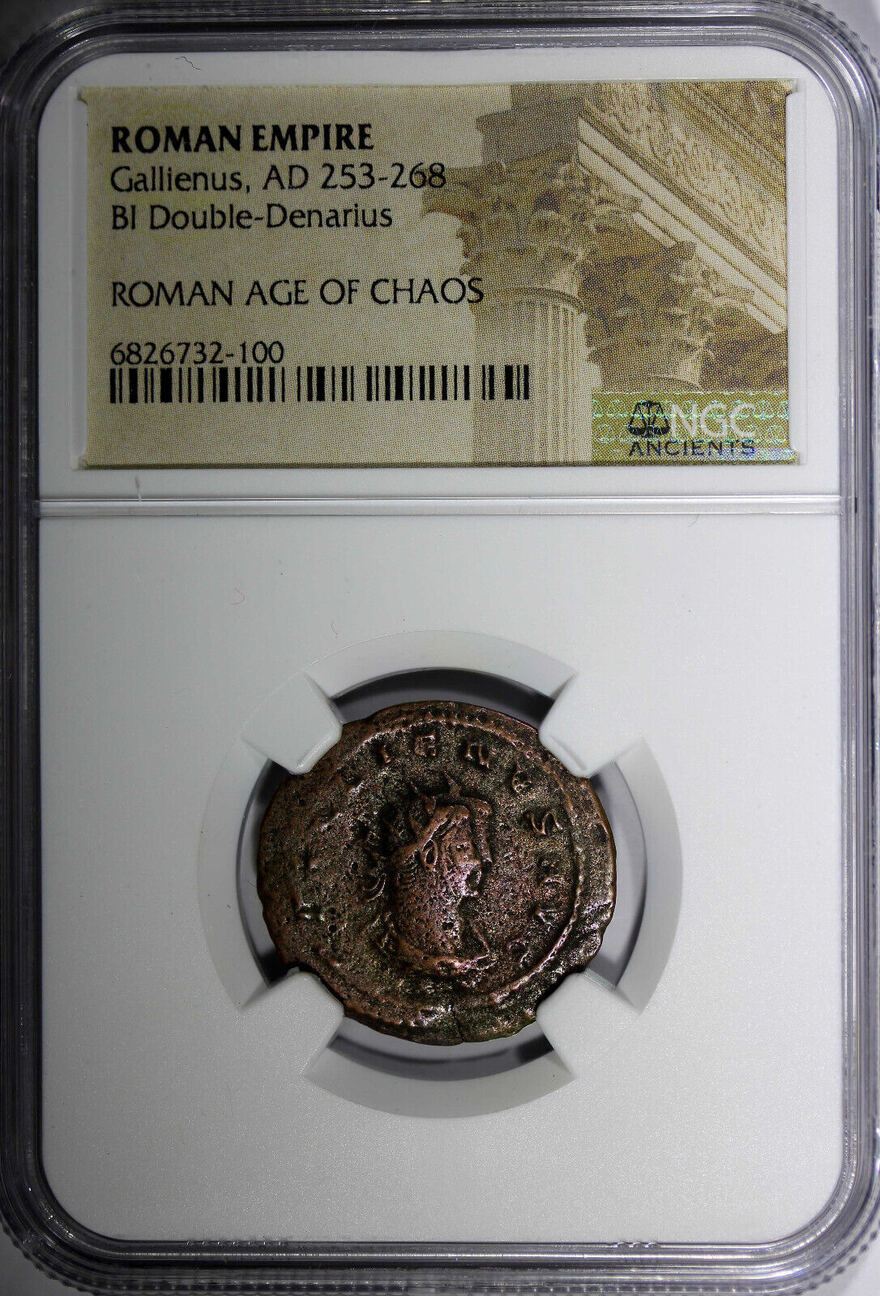
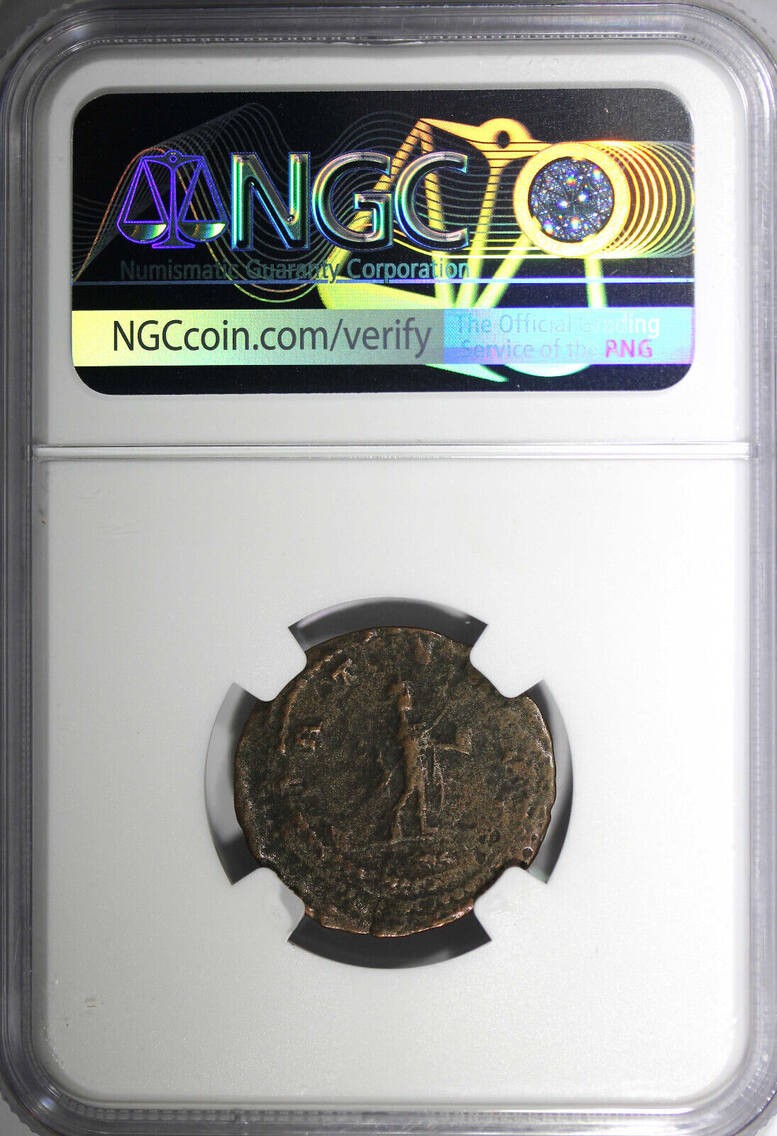
Denarius 268 après J.-C. ROMAN.Gallienus AD 253-268 BI Double- / Rev. VIRTUS NGC (10)


Enumismatics Inc. 
11
Sur MA-Shops depuis 11 années
1279 évaluations,
100 % Positif ( derniers 24 mois )
Expédition dans le monde entier
40,15 EUR45.00 US$
En cas de commandes internationales, le client doit payer, en cas échéant, la TVA et des droits de douane.
+ 17,84 EUR frais d'envoi ( vers France métropolitaine )
Délai de livraison : 5 à 8 jours
+ 17,84 EUR frais d'envoi ( vers France métropolitaine )
| +49 (0)2871 2180 383 |
| Modes de paiement |
| virement bancaire |
| Chèque/Money Order |
 Certification
800315
ROMAN AGE OF CHAOS
Gallienus, AD 253-268 ROMAN EMPIRE
BI Double-Denarius
ROMAN EMPIRE
Gallienus, AD 253-268
GALLIENUS 253-268 AD
BI DOUBLE DENARIUS
Roman Age of Chaos
CERTIFIED BY NGC
Obverse:
Gallienus facing right, wearing a military style drape and a radiate
crown, framed by the inscription ''GALLIENVS AVG,'' which simply means ''Emperor
Gallienus.''
Reverse : VIRTVS•EQVIT / T, Virtus advancing right, holding spear and shield.
In Roman mythology, Virtus was the deity of
bravery and military strength, the personification of the Roman virtue of virtus.
The Greek equivalent deity was Arete. He/she was identified with the Roman god
Honos (personification of honour) and was often honoured together with him, such
as in the Temple of Virtus and Honos at the Porta Capena in Rome itself.
Virtus was a specific virtue in Ancient Rome. It carries connotations of valor,
manliness, excellence, courage, character, and worth, perceived as masculine
strengths (from Latin vir, ''man''). It was thus a frequently stated virtue of
Roman emperors, and was personified as a deity-Virtus.
Publius Licinius Egnatius Gallienus ( c. 218
– September 268) was Roman emperor with his father Valerian from 253 to 260 and
alone from 260 to 268. He ruled during the Crisis of the Third Century that
nearly caused the collapse of the empire. He won a number of military victories
against usurpers and Germanic tribes, but was unable to prevent the secession of
important provinces. His 15-year reign was the longest in half a century.
Born into a wealthy and traditional senatorial family, Gallienus was the son of
Valerian and Mariniana. Valerian became Emperor in September 253 and had the
Roman senate elevate Gallienus to the ranks of Caesar and Augustus. Valerian
divided the empire between him and his son, with Valerian ruling the east and
his son the west. Gallienus defeated the usurper Ingenuus in 258 and destroyed
an Alemanni army at Mediolanum in 259.
The defeat and capture of Valerian at Edessa in 260 by the Sasanian Empire threw
the Roman Empire into the chaos of civil war. Control of the whole empire passed
to Gallienus. He defeated the eastern usurpers Macrianus Major and Lucius
Mussius Aemilianus in 261–262 but failed to stop the formation of the breakaway
Gallic Empire under general umus. Aureolus, another usurper, proclaimed
himself emperor in Mediolanum in 268 but was defeated outside the city by
Gallienus and besieged inside. While the siege was ongoing, Gallienus was
assassinated, stabbed to death by the officer Cecropius, as part of a
conspiracy.
Please check out my other listings and we will be happy to combine in one package !
YOU WILL RECEIVED THE SAME COIN AS PICTURED.

Shipping Info
Les ventes en ligne sont possibles, les livraisons internationales peuvent être un peu plus longues.
|
Renoncer au contrat ici Page d'accueil de cette boutique | 0Panier | CGV | Mentions légales | MA CGV | Déclaration de protection de données | Garantie | MA-Shops Nouveautés Copyright ® 2001-2026, MA-SHOPS Coins All Rights Reserved. Designated trademarks and brands are the property of their respective owners. |